
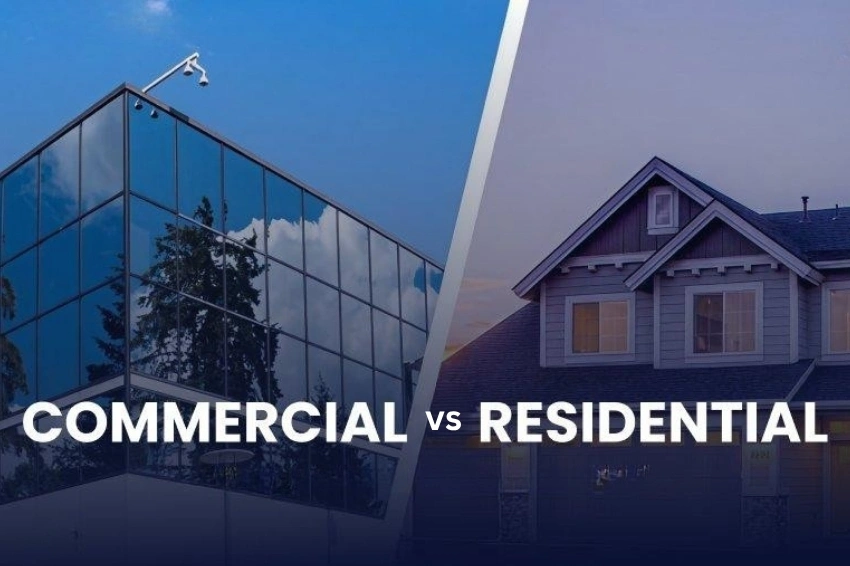
Residential vs commercial property investment is one of the most common questions among real estate investors. Whether you're buying your first investment property or expanding your portfolio, choosing between residential and commercial real estate can significantly impact your returns, risk level, and long-term financial goals.
Both property types offer unique advantages. Residential properties generally provide steady rental demand and are easier to finance, while commercial properties can generate higher rental yields and longer lease agreements. Understanding the differences will help you make an informed investment decision based on your budget, objectives, and market conditions.
In this guide, we'll compare residential and commercial property investments to help you determine which option is best suited to your needs.
What Is Residential Property Investment?
Residential property investment involves purchasing properties designed for people to live in. These include apartments, villas, independent houses, gated community homes, and residential plots.
Many first-time investors prefer residential real estate because of its relatively lower investment cost, easier financing options, and consistent demand for housing.
Benefits of Residential Property Investment
Residential properties offer several advantages:
- Lower initial investment compared to many commercial properties.
- Consistent rental demand in growing cities.
- Easier access to home loans.
- Larger pool of buyers when it's time to sell.
- Suitable for both rental income and long-term capital appreciation.
For investors looking for stable returns with moderate risk, residential property remains a popular choice.
What Is Commercial Property Investment?
Commercial property investment refers to purchasing properties intended for business purposes, such as office spaces, retail shops, showrooms, warehouses, and commercial buildings.
These properties are generally leased to businesses rather than individuals, making them an attractive option for investors seeking higher rental income.
Benefits of Commercial Property Investment
Commercial real estate offers several potential advantages:
- Higher rental income compared to many residential properties.
- Longer lease periods.
- Professional tenants.
- Potential for stronger returns in prime business locations.
- Opportunities for portfolio diversification.
However, commercial properties often require a higher investment and may experience longer vacancy periods if suitable tenants are not readily available.
Residential vs Commercial Property: Key Differences
Before choosing between residential and commercial property investment, compare these important factors:
Initial Investment
Residential properties usually require a lower investment, making them suitable for first-time investors.
Commercial properties generally involve higher purchase prices and larger upfront capital requirements.
Rental Income
Residential properties provide relatively stable rental income because housing demand remains consistent.
Commercial properties often offer higher rental yields, especially in well-established business districts and high-footfall commercial locations.
Vacancy Risk
Residential properties are generally easier to rent because people will always need homes.
Commercial properties may remain vacant for longer periods depending on business demand and economic conditions.
Maintenance
Residential properties require regular maintenance such as painting, plumbing, electrical work, and common area upkeep.
Commercial properties may involve specialised maintenance depending on the type of business operating within the property.
Financing
Banks and financial institutions generally offer more flexible financing options for residential property purchases.
Commercial property loans may require higher down payments and different lending criteria.
Which Investment Offers Better Long-Term Appreciation?
Property appreciation depends more on location, infrastructure development, market demand, and property quality than on whether the property is residential or commercial.
Residential properties located near:
- IT parks
- Metro stations
- Educational institutions
- Hospitals
- Commercial centres
often experience steady appreciation.
Commercial properties in rapidly developing business districts can also generate excellent long-term returns, particularly where new infrastructure and commercial activity continue to grow.
Rather than focusing only on the property type, investors should evaluate the area's future development potential.
Which Property Is Better for Rental Income?
If your primary goal is generating monthly income, commercial properties may offer higher rental returns.
However, residential properties generally provide:
- More consistent occupancy
- Lower vacancy risk
- Easier tenant replacement
- Simpler property management
For many investors, especially beginners, steady occupancy can be just as valuable as a higher rental yield.
Who Should Invest in Residential Property?
Residential property investment may be the right choice if you:
- Are investing for the first time.
- Prefer lower investment risk.
- Want steady rental income.
- Plan to build long-term wealth gradually.
- Need easier financing options.
Who Should Invest in Commercial Property?
Commercial property investment may suit you if you:
- Have a larger investment budget.
- Can manage higher investment risks.
- Are seeking higher rental returns.
- Have a long-term investment strategy.
- Understand commercial market trends.
Factors to Consider Before Making Your Decision
Before investing in any property, evaluate:
- Your investment goals.
- Available budget.
- Expected rental income.
- Future appreciation potential.
- Property location.
- Builder reputation.
- Maintenance costs.
- Legal documentation.
- Market demand.
A successful real estate investment depends on careful research rather than choosing the cheapest or most attractive property.
Conclusion
When comparing residential vs commercial property investment, there is no universal winner. Residential properties offer stability, consistent rental demand, and easier financing, making them ideal for many first-time investors. Commercial properties, on the other hand, can deliver higher rental income and attractive long-term returns but often involve greater investment and higher risk.
The right investment depends on your financial goals, risk tolerance, and investment strategy. Before making a decision, carefully evaluate the property's location, market demand, future growth prospects, and overall investment potential. Taking a well-informed approach today can help you build a stronger and more profitable real estate portfolio in the years ahead.