
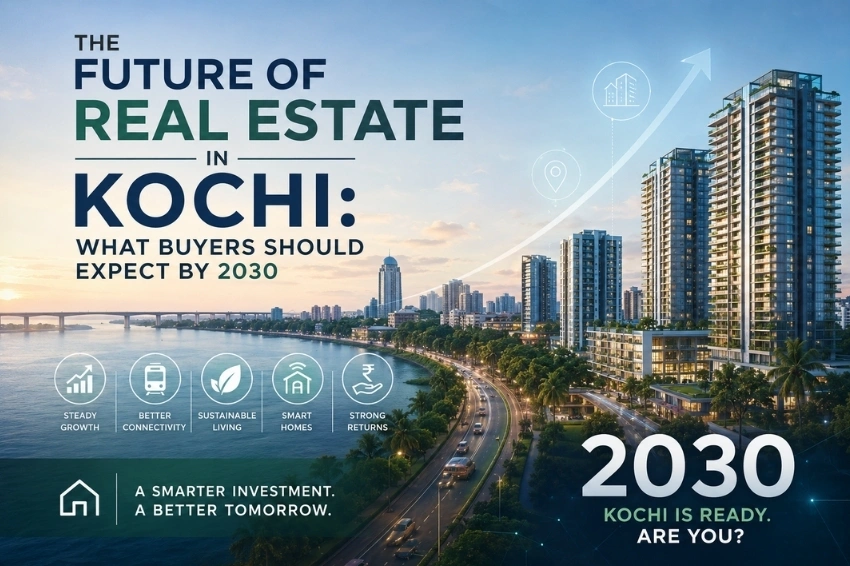
Kochi has steadily emerged as one of Kerala’s most attractive real estate markets, driven by infrastructure development, improving connectivity, expanding business districts, tourism, and growing demand for quality housing. From premium waterfront apartments to affordable residential developments, the city offers opportunities across different segments.
As we look toward 2030, the future of real estate in Kochi is expected to be shaped by changing buyer preferences, infrastructure upgrades, employment growth, and the increasing demand for lifestyle-oriented properties. For homebuyers and investors considering property in Kochi, understanding these trends can help make better long-term decisions.
Kochi Real Estate Market Is Moving Towards Quality and Connectivity
One of the most important trends expected to influence the Kochi real estate market is the growing importance of location and connectivity.
Homebuyers are no longer looking only at the size or price of a property. Easy access to workplaces, schools, hospitals, shopping centres, public transportation, and major roads has become equally important.
Areas such as Kakkanad, Vyttila, Edappally, Kadavanthra, Panampilly Nagar, Marine Drive, and ssurrounding locations are likely to remain attractive because of their established infrastructure and connectivity.
For buyers searching for flats in Kochi, properties located close to major employment and transportation hubs may continue to enjoy strong demand in the coming years.
Infrastructure Will Continue to Drive Property Demand
Infrastructure development has always played an important role in shaping property values. Better roads, public transportation, metro connectivity, water transport, and improved access to commercial centres can make previously overlooked locations more attractive to buyers.
Kochi’s expanding transportation network is expected to strengthen connectivity between residential areas and major employment centres. This could create new property investment opportunities around developing corridors.
By 2030, buyers may increasingly look beyond traditional premium neighbourhoods and consider emerging locations that offer a combination of connectivity, infrastructure, affordability, and future growth potential.
For investors, this makes infrastructure-led property research particularly important.
Waterfront Properties Could Become Even More Desirable
Kochi’s unique geography gives it an advantage that many Indian cities do not have — extensive waterfront locations.
Areas around Marine Drive and other waterfront neighbourhoods have already established a reputation for premium residential living. Waterfront apartments offer more than just a convenient location; they provide views, open surroundings, lifestyle amenities, and a distinctive residential experience.
As buyers become more lifestyle-conscious, the demand for waterfront apartments in Kochi could continue to increase.
However, buyers should not assume that every property with a water view is automatically a good investment. Factors such as construction quality, maintenance, location, developer reputation, accessibility, amenities, and resale demand should all be evaluated before purchasing.
The Demand for Lifestyle-Oriented Apartments Will Grow
The definition of a desirable home is changing.
Modern buyers increasingly want homes that combine comfort, convenience, security, recreation, and community living. This is contributing to the growing popularity of residential projects with swimming pools, fitness centres, landscaped spaces, clubhouses, recreational areas, security systems, and other lifestyle amenities.
This trend is expected to become even stronger by 2030.
The premium segment of apartments in Kochi is therefore likely to focus increasingly on the overall living experience rather than simply offering larger floor areas.
For buyers, this means evaluating the quality and usefulness of amenities rather than choosing a project simply because it has a long list of facilities.
Mid-Segment Luxury Could Remain a Strong Market
Luxury real estate is not limited to ultra-expensive properties.
A growing group of buyers is looking for homes that offer premium features, attractive locations, modern amenities, and better construction quality without entering the ultra-luxury segment.
This creates opportunities in the mid-segment luxury property market in Kochi.
Buyers in this category typically want a balance between price and lifestyle. They may be willing to pay more for a better location, larger living spaces, quality interiors, views, security, parking, and premium amenities.
By 2030, developers that successfully combine these features with practical pricing could attract significant demand.
Technology Will Change How Buyers Search for Property
The property-buying process is also becoming increasingly digital.
Today, buyers can search for property for sale in Kochi, compare projects, view photographs, explore floor plans, watch property videos, and communicate with agents without visiting multiple locations.
By 2030, technology is likely to become an even more important part of the real estate buying journey.
Virtual property tours, high-quality video walkthroughs, digital documentation, online consultations, location intelligence, and data-driven property comparisons could make the buying process more convenient.
However, digital research should complement — not replace — proper physical inspection and legal verification.
Rental Demand Will Remain Important
Kochi’s expanding commercial and employment ecosystem is another factor supporting residential real estate.
Professionals, students, business travellers, expatriates, and families relocating to the city contribute to rental demand. Locations with good access to employment hubs, transportation, educational institutions, and commercial centres can therefore remain attractive to rental-property investors.
For investors considering property investment in Kochi, rental potential should be evaluated alongside expected capital appreciation.
A property that offers both consistent rental demand and good long-term resale prospects can provide greater flexibility for investors.
Sustainable and Efficient Homes Will Gain Importance
Environmental considerations are also likely to influence the future of real estate.
Energy-efficient lighting, water management systems, natural ventilation, landscaped areas, waste-management facilities, and sustainable construction practices could become increasingly important to buyers.
As awareness of long-term operating costs grows, buyers may look more closely at how efficiently a property is designed and maintained.
This means the future of real estate in Kochi will not only be about location and luxury. Efficiency, sustainability, and long-term maintenance could become important factors in property selection.
What Should Buyers Look for Before 2030?
Anyone planning to purchase property in Kochi should think beyond the immediate market.
Before buying, consider:
• Location and future connectivity
• Developer reputation and construction quality
• RERA registration and project approvals
• Resale potential
• Rental demand
• Maintenance costs
• Quality of amenities
• Parking and accessibility
• Flood and environmental considerations
• Legal documentation and property title
• Overall neighbourhood development
A property should ideally meet both your current requirements and your long-term financial objectives.
Conclusion
The future of real estate in Kochi by 2030 looks promising, but the market is likely to become more selective. Buyers will increasingly evaluate properties based on location, connectivity, lifestyle, construction quality, rental potential, sustainability, and long-term value.
From flats in Kochi and modern apartments to premium waterfront residences and investment properties, opportunities will continue to exist across different segments.
For buyers, the key will be making informed decisions rather than simply following market trends. The best property is not necessarily the most expensive one — it is the property that offers the right combination of location, quality, usability, and long-term potential.