
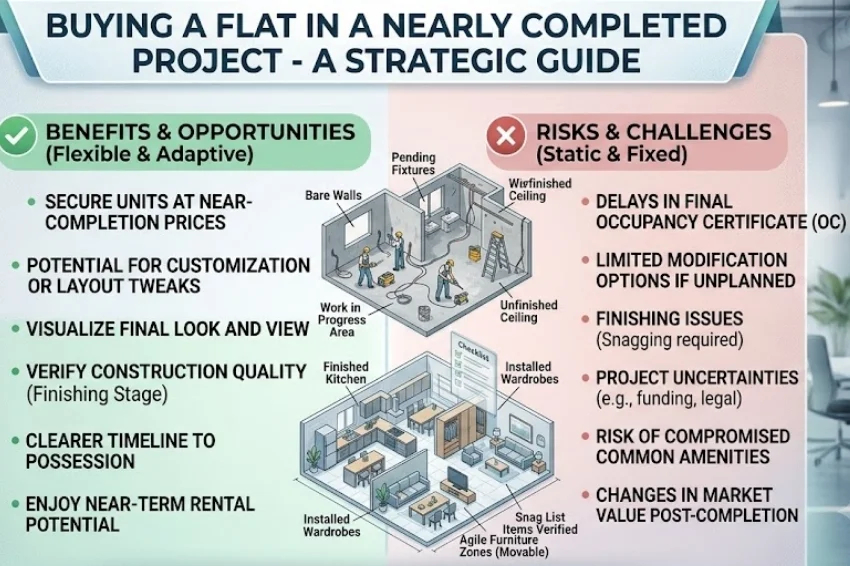
Buying a flat in a nearly completed residential project can be attractive for homebuyers who want to see the actual building before deciding. You may be able to inspect the apartment, assess common areas and get a clearer idea of the handover timeline. However, a building that looks almost ready is not automatically ready for occupation. Before paying a booking amount, verify its legal status, construction quality, approvals and financial terms.
If you are searching for a flat for sale in Kochi or elsewhere in Kerala, use this checklist to evaluate a nearly completed apartment project carefully.
1. Verify RERA Registration and Project Details
Check whether the project is registered with the Kerala Real Estate Regulatory Authority (K-RERA), where registration is applicable. Match the project name, promoter details and approved completion date with the information provided by the builder. Review the project status and disclosures available through the official portal.
Do not rely only on brochures or verbal assurances. If the project is exempt from registration, ask the promoter to explain why and provide supporting documents. Consider having a property lawyer verify the paperwork independently.
2. Check the Occupancy Certificate and Completion Status
Ask whether the building has received the required completion and occupancy approvals. A nearly completed project may still be awaiting inspections, utility connections or final approvals.
Request a copy of the Occupancy Certificate (OC), where required, and confirm that it covers the relevant building or phase. If the OC is pending, get a written explanation of what remains and the expected timeline. Do not assume that a promised handover date means the apartment is legally ready for occupation.
3. Inspect the Actual Flat, Not Just the Model Apartment
Visit the specific unit you intend to buy. Check walls and ceilings for cracks, damp patches, seepage and uneven finishes. Test doors, windows and locks, inspect balcony railings, and check bathroom drainage, sanitary fittings, electrical points and ventilation.
If possible, visit after rainfall to look for seepage or waterlogging. Make a written snag list of incomplete or defective items and request confirmation that these will be rectified before handover. For extra confidence, arrange an independent engineer or qualified home inspector to assess the flat.
4. Examine Common Areas and Essential Services
Walk through the entrance, corridors, staircases, lifts, parking area and shared spaces. Check whether lifts are operational, fire-safety systems are in place, emergency exits are accessible, and backup power arrangements work as promised.
Ask about water supply, sewage treatment, rainwater drainage, waste management and electricity connections. In Kerala’s monsoon conditions, pay particular attention to site drainage, basement or stilt parking, approach roads and waterlogging. Confirm which facilities are complete and which are pending. A clubhouse or landscaped area shown in the brochure may not be ready at handover.
5. Confirm the Builder’s Title and Approval Documents
Request key documents, including land title documents, an encumbrance certificate, sanctioned building plan, building permit and relevant approvals. Ask whether any mortgage, charge or litigation affects the property, and clarify how any project loan or lender charge will be released for your apartment.
Check that the flat number, floor, stated area, parking allocation and share of land correspond with the agreement and approved plans. For a resale flat, verify the seller’s ownership and outstanding dues. Have a property lawyer review the documents before committing significant funds.
6. Understand the Total Cost Before Booking
The advertised price may not represent the full amount you will pay. Request a written cost sheet covering the apartment price, parking charges if applicable, floor-rise charges, maintenance deposit, corpus fund, utility or connection charges, taxes and registration-related expenses. Ask which items are mandatory.
Compare the quoted price with similar flats for sale in the same locality, considering the floor, view, layout, construction quality, amenities and readiness for occupation. A lower price may not be a bargain if facilities are unfinished or additional costs remain.
7. Read the Booking Form and Sale Agreement Carefully
Before paying, read the booking form, allotment letter and agreement for sale. Check the payment schedule, possession date, specifications, cancellation conditions, refund terms and consequences of delays. Ensure promises about finishing work, fittings, amenities and handover are recorded in writing.
Do not sign blank documents or accept vague completion commitments. Keep receipts for every payment and pay only through traceable channels to the appropriate authorised account. If you need a home loan, confirm the lender’s documentation requirements before committing to a payment deadline.
8. Ask About Maintenance and Handover
Find out when maintenance charges begin, who will manage the building initially and whether a residents’ association has been formed or is planned. Ask about monthly maintenance, the services it covers and how common-area expenses will be handled. Confirm that your parking allocation is documented correctly.
Before taking possession, request a joint inspection, handover checklist, keys, relevant warranties, meter details and copies of available approvals. Record pending work and agree on a completion date in writing.
Conclusion
Buying a flat in a nearly completed project lets you assess the actual apartment and construction progress, but careful due diligence remains essential. Verify RERA details, occupancy approvals, title documents, construction quality, common facilities and the complete cost before booking. Get key promises in writing and seek independent legal or technical advice when needed.