
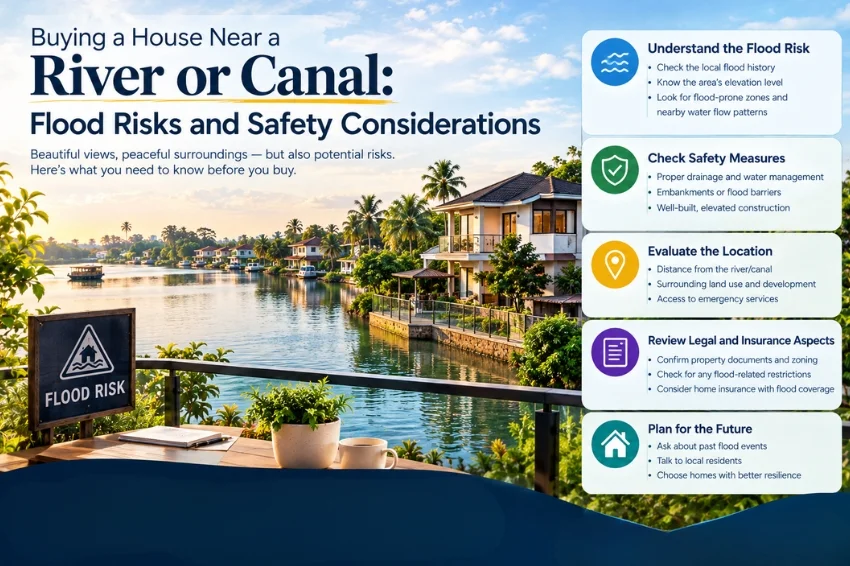
A house near a river or canal can offer beautiful surroundings, pleasant views and a peaceful living environment. Such properties may also attract buyers looking for waterfront homes or long-term real estate investments. However, purchasing a property close to a natural or man-made waterbody requires careful evaluation.
In Kerala, where heavy monsoon rainfall, river flooding and local waterlogging can affect residential areas, buyers should understand the risks before investing. A property with an attractive waterfront location may involve challenges related to flooding, soil erosion, drainage and building regulations.
Here are the important factors to consider before buying a house near a river or canal in Kerala.
1. Understand the Flood Risk of the Location
One of the first things to check when buying a house near a river or canal is its history of flooding. During periods of heavy rainfall, rivers and canals may overflow, affecting nearby residential properties. The risk can be higher in low-lying areas, floodplains and locations with poor drainage.
Do not judge a property's safety based only on its condition during summer. Ask nearby residents about previous flooding incidents, water levels during heavy monsoons and how long water usually takes to recede.
You can also refer to the Kerala State Disaster Management Authority (KSDMA) flood hazard maps to understand the broader flood exposure of the area. However, these maps should be treated as a screening tool rather than a guarantee of safety for an individual plot.
2. Check the Land Elevation and Distance from the Waterbody
The distance between a house and a river or canal is important, but it is not the only factor determining safety. The elevation of the property, surrounding land levels and natural water flow can influence its flood exposure.
A house located slightly away from a river may still experience waterlogging if the surrounding area is low-lying. Similarly, a property at a higher elevation may have a different risk profile.
During your site visit, examine the land level in relation to the nearby waterbody, road and neighbouring properties. Check whether the house has a raised foundation and whether rainwater can drain away naturally.
3. Examine Soil Stability and Riverbank Erosion
Properties close to rivers and canals may be exposed to soil erosion, particularly where water flow is strong or riverbanks are not properly protected.
Over time, erosion can affect the stability of the land and potentially damage boundary walls, foundations and nearby structures. Look for visible signs such as cracks in retaining walls, exposed soil, uneven ground and sections of the riverbank that appear to be collapsing.
If the property is close to an unstable riverbank, consider getting an assessment from a qualified civil or geotechnical engineer. Do not rely only on the seller's assurance that the land is safe.
4. Check Drainage and Waterlogging Conditions
Good drainage is essential for any residential property, especially one located near a river or canal. During heavy rainfall, blocked drains, inadequate stormwater channels and poorly planned land development can cause water to accumulate around houses.
Inspect the property's drainage arrangements and identify where rainwater flows during monsoon periods. Check whether nearby roads, access routes and surrounding plots become waterlogged.
Also examine whether the house has suitable rainwater outlets, proper site grading and functional drainage connections. A beautiful waterfront property may become inconvenient if residents face repeated access problems during heavy rainfall.
5. Verify Legal Restrictions and Construction Permissions
Not every plot near a river or canal is suitable for unrestricted construction. Depending on its location, the property may fall under applicable environmental regulations, Coastal Regulation Zone (CRZ) restrictions, local master plan provisions or waterbody-related setback requirements.
Before purchasing, verify the approved building plan, building permit, land classification and applicable restrictions with the concerned local authority.
For properties near tidal waterbodies or coastal areas, additional CRZ regulations may apply. Do not assume that a vacant plot can automatically be used for residential construction simply because neighbouring properties already have houses.
Kerala's K-SMART Know Your Land facility can help identify certain spatial restrictions and construction-related regulations applicable to a plot.
6. Inspect the House for Previous Water Damage
If you are buying a ready-to-move house near a river or canal, carefully inspect the building for signs of previous flooding or water seepage.
Pay attention to:
• Damp patches and peeling paint on lower walls
• Watermarks on floors and external walls
• Cracks in foundations and retaining structures
• Rusting of metal fittings and electrical components
• Damaged flooring, wooden doors and cupboards
• Musty smells in ground-floor rooms and storage areas
Ask the seller whether the property has experienced flooding or required major waterproofing and repair work. If possible, arrange a professional building inspection before finalising the purchase.
7. Consider Insurance, Maintenance and Resale Value
A waterfront property may have attractive investment potential, but its long-term value depends on more than its location and view.
Repeated flooding, erosion, access difficulties and higher maintenance requirements may affect buyer interest and resale opportunities. Insurance availability and the specific coverage offered should also be checked. Do not assume that every home insurance policy covers flood-related damage.
Before investing, compare similar properties in the area and consider the cost of maintaining drainage systems, boundary protection and other structures.
8. A Practical Checklist Before Buying
Before purchasing a house near a river or canal, make sure you:
• Check the property's flood history and nearby water levels.
• Review KSDMA flood hazard maps.
• Examine land elevation and drainage conditions.
• Inspect riverbank stability and retaining walls.
• Verify title documents, land classification and building approvals.
• Check applicable CRZ and local construction restrictions.
• Ask residents about monsoon-related problems.
• Arrange professional legal and structural inspections where necessary.
Conclusion
Buying a house near a river or canal can be a rewarding choice when the location, land condition and construction are suitable. However, attractive waterfront views should never replace proper flood-risk assessment and legal verification.
Take time to inspect the property during the monsoon, understand its surroundings and verify all relevant documents before investing. Explore residential property listings on Bynsel.com to compare houses and properties across Kerala and make a more informed buying decision.