
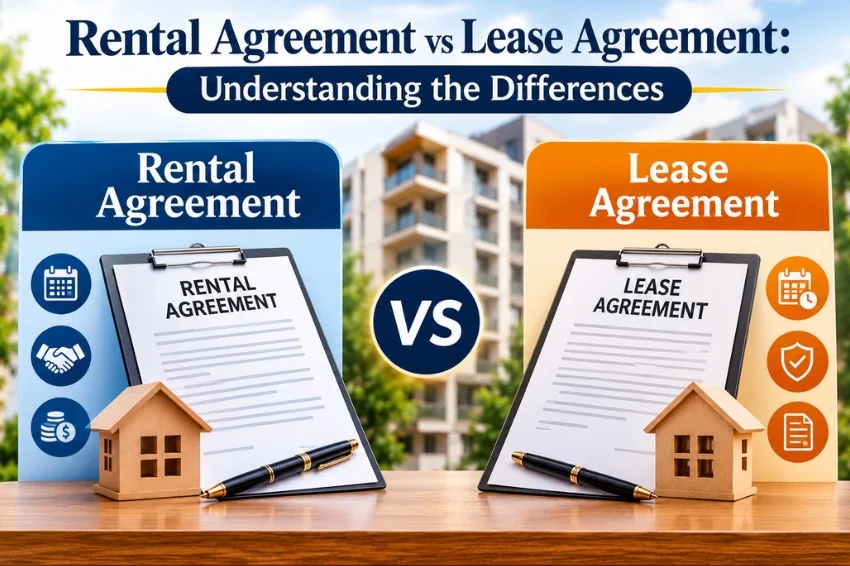
When renting a house, apartment or commercial property, one of the first steps is signing a written agreement between the owner and the tenant. However, many people use the terms rental agreement and lease agreement interchangeably without understanding their differences. Although both documents establish the terms and conditions of a property rental arrangement, they can differ in duration, renewal conditions, flexibility and legal implications.
Whether you are planning to rent an apartment in Kochi, lease a commercial space or offer your property to tenants, understanding the difference between a rental agreement and a lease agreement can help you make an informed decision.
1. What Is a Rental Agreement?
A rental agreement is a written contract between a landlord and a tenant that explains the conditions under which a property can be occupied. It generally specifies the monthly rent, security deposit, agreement duration, maintenance responsibilities and other terms.
Rental agreements are commonly used for short-term arrangements, often with a monthly rental period or a fixed term of up to 11 months. However, the actual duration depends on the agreement between both parties.
These agreements may provide greater flexibility because the terms can be reviewed or renewed at regular intervals. They are commonly preferred for residential apartments, independent houses and properties where tenants may not require long-term occupancy.
2. What Is a Lease Agreement?
A lease agreement is a contract that grants a tenant the right to occupy or use a property for a specified period under agreed conditions. It is commonly used for longer-term residential and commercial arrangements.
Unlike a typical month-to-month rental arrangement, a lease generally establishes a fixed period during which both parties are expected to follow the agreed terms. The agreement may also specify conditions for early termination, renewal, rent revision and other responsibilities.
Lease agreements are often preferred by businesses, offices, shops and tenants who need stability over a longer period. They can also be used for residential properties when the landlord and tenant agree to a longer occupancy period.
3. Key Differences Between Rental and Lease Agreements
Although both documents serve a similar purpose, some important differences should be considered before signing.
Duration: Rental agreements are often used for shorter or periodically renewable arrangements, while lease agreements commonly cover a longer fixed period.
Flexibility: Rental arrangements may allow more frequent changes or renewals, depending on the agreed terms. Lease agreements generally provide greater continuity during the specified period.
Rent revision: In a rental agreement, rent may be revised at renewal or according to the agreed conditions. A lease agreement may specify the rent for the entire term or include a predetermined revision schedule.
Termination: The notice period and termination conditions depend on the contract. Shorter rental arrangements may offer more frequent opportunities to end or renew the agreement, while early termination of a fixed-term lease may involve specific conditions or financial consequences.
Registration: Registration requirements depend on the duration and nature of the arrangement and applicable state laws. In India, leases from year to year, for a term exceeding one year, or reserving yearly rent generally require registration under the Registration Act, 1908.
4. Which Agreement Is Better for Residential Properties?
For residential properties such as apartments, villas and independent houses, the choice depends on how long the tenant intends to stay and the landlord's preferences.
A rental agreement may be suitable when a tenant is relocating for work, studying in another city or looking for temporary accommodation. It can offer flexibility when the duration of stay is uncertain.
A lease agreement may be more appropriate when tenants want to occupy a property for an extended period. It provides a defined arrangement and can help both parties plan their financial and residential commitments.
For landlords, the decision should also consider the reliability of the tenant, expected rental income and future plans for the property.
5. Which Agreement Is Suitable for Commercial Properties?
Commercial properties often require a different approach because businesses may invest in interiors, equipment, signage and other infrastructure before starting operations.
For offices, retail shops, warehouses and other business spaces, a longer-term lease can provide greater occupancy stability. It allows businesses to plan their operations without frequent renewal concerns.
However, some businesses may prefer shorter rental arrangements when testing a new location or operating temporarily. The agreement should clearly address permitted commercial activities, maintenance, property modifications, rent revisions, security deposits and termination conditions.
Before signing, both parties should also verify whether the property's approved usage permits the intended commercial activity.
6. Important Clauses to Include in Both Agreements
Regardless of whether you choose a rental agreement or lease agreement, certain details should be clearly documented.
• Parties involved: Full names and addresses of the landlord and tenant.
• Property details: Complete address and description of the rented premises.
• Agreement duration: Start date, end date and renewal conditions.
• Rent and deposit: Monthly rent, payment due date, security deposit and refund conditions.
• Maintenance responsibilities: Details of who pays for routine maintenance, major repairs and utility bills.
• Termination conditions: Notice period, early termination rules and applicable consequences.
• Property usage: Whether the property is intended for residential or commercial purposes.
• Property handover: Conditions for returning the premises and refunding the security deposit.
Clearly written terms can reduce misunderstandings and provide a reference if disagreements arise during the tenancy.
7. Registration and Legal Considerations in Kerala
In Kerala, landlords and tenants should ensure that their agreements comply with applicable central and state laws. Under the Registration Act, 1908, certain leases, including those exceeding one year, require compulsory registration. Other agreements may also be registered voluntarily, subject to applicable requirements.
Stamp duty and registration fees depend on the nature, duration and terms of the agreement and the prevailing state rules. An agreement that does not require compulsory registration may still need appropriate stamp duty.
Both parties should carefully review the document before signing and obtain legal advice when dealing with long-term leases, commercial properties or complex rental conditions.
Conclusion
Choosing between a rental agreement and a lease agreement depends on the property type, duration of occupancy and expectations of both parties. While shorter rental arrangements may offer flexibility, longer leases can provide greater stability for tenants and landlords.
Looking for residential or commercial properties for rent or lease in Kochi and other locations in Kerala? Explore the latest property listings on Bynsel.com to discover available options and connect with property owners.