
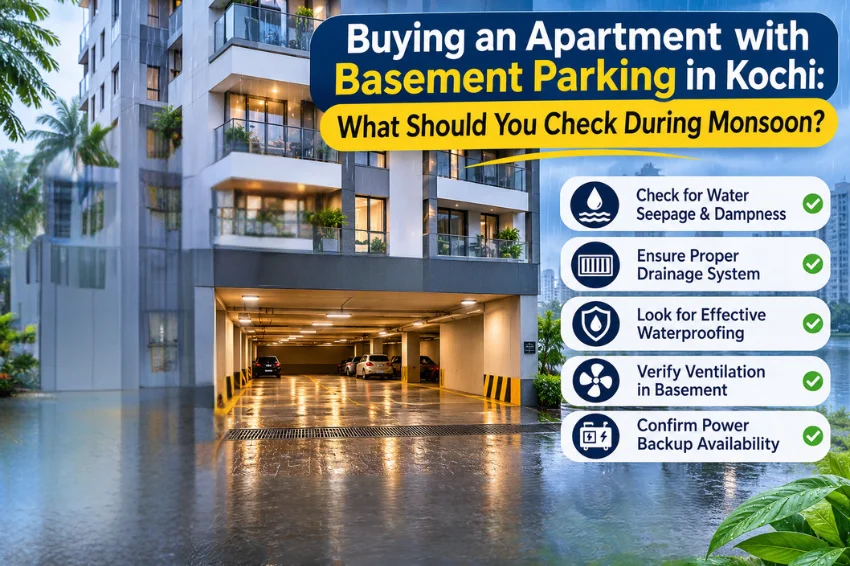
Basement parking is a convenient feature in many residential apartment projects in Kochi. It protects vehicles from direct sunlight and rain while making parking more organised within the building. However, Kerala's heavy monsoon rainfall can create challenges for underground parking areas, particularly when drainage systems are inadequate or water enters through ramps and basement openings.
For homebuyers considering an apartment with basement parking in Kochi, checking the parking area during the monsoon is an important part of property inspection. Waterlogging, seepage, poor ventilation and drainage problems can lead to vehicle damage, unpleasant odours and expensive building repairs.
Before purchasing a flat, here are the important basement parking checks every buyer should consider.
1. Check for Waterlogging During Heavy Rain
The first thing to examine is whether rainwater accumulates inside the basement parking area. Visit the apartment during or shortly after heavy rainfall, if possible, to understand how the drainage system performs under actual monsoon conditions.
Look for standing water near parking spaces, lift lobbies, basement corners and entry points. Even small areas of repeated water accumulation may indicate drainage problems.
Ask existing residents whether the basement has experienced flooding during previous monsoons. Also check whether water enters the basement during intense rainfall or when nearby roads become waterlogged.
Do not depend entirely on the appearance of a dry basement during summer. Its performance during heavy rain provides a much better indication of potential problems.
2. Inspect the Basement Entrance and Parking Ramp
The basement ramp is one of the most important areas to inspect because rainwater can flow down into the parking level if the entrance is poorly designed.
Check whether the ramp has an appropriate slope, drainage channels and barriers to prevent surface water from entering. Look for water marks, mud deposits and damaged flooring that may indicate previous water entry.
Also examine whether the ramp becomes slippery during rainfall. Adequate surface grip and lighting are important for safe vehicle movement.
If the apartment has multiple basement levels, check how vehicles and pedestrians access each level and whether the entrance remains usable during heavy rainfall.
3. Examine the Basement Drainage and Sump System
An effective drainage arrangement is essential for underground parking in a city that experiences heavy monsoon showers.
Ask the apartment association or builder about the basement drainage system. Check whether floor drains are available at suitable locations and whether they are regularly cleaned.
Find out whether the basement has a sump and water pumps to remove accumulated rainwater. If pumps are installed, ask whether they are maintained regularly and whether backup power is available during electricity interruptions.
Blocked drains, poorly maintained pumps and inadequate water disposal arrangements can increase the risk of basement flooding.
4. Look for Seepage and Dampness on Walls and Ceilings
Water seepage is another common concern in underground parking areas. Inspect the basement walls, ceilings, columns and floor joints for damp patches, peeling paint, white salt deposits and visible water stains.
Pay attention to cracks and areas around pipes, construction joints and ventilation openings. These may become entry points for water during prolonged rainfall.
Persistent dampness can damage protective coatings, affect building components and create unpleasant conditions in the parking area.
If you notice signs of repeated seepage, ask the builder or apartment association about previous waterproofing work and whether the problem has been resolved. An independent building inspection may help identify the underlying cause.
5. Check Ventilation and Lighting
Basement parking areas require adequate ventilation to maintain air quality and reduce moisture accumulation.
Check whether the parking level has sufficient natural or mechanical ventilation. Poor ventilation can result in unpleasant odours, excessive humidity and condensation.
Also inspect the lighting arrangements, especially near ramps, corners, pedestrian pathways and lift entrances. Proper lighting improves visibility when vehicles enter or exit during rainy conditions.
Ask whether ventilation equipment and emergency lighting are connected to backup power where required.
6. Understand Flood History and Surrounding Drainage
The condition of the basement cannot be evaluated separately from the surrounding neighbourhood. Even a well-designed parking area may face difficulties if the approach road or nearby land experiences severe waterlogging.
Check the property's elevation compared with the surrounding roads and drainage channels. Ask residents about previous flooding incidents and whether the basement or access road has been affected.
Examine how rainwater flows around the apartment compound and whether nearby drains are maintained. In low-lying areas, additional attention should be given to local flood history and the availability of effective water outlets.
For further verification, consult relevant local authority records and Kerala's official flood or hazard information where available.
7. Check Vehicle Safety and Emergency Access
Basement parking should provide safe access for vehicles and residents even during heavy rainfall.
Check whether the parking spaces are clearly marked and whether the vehicle movement area has sufficient clearance. Look for electrical panels, charging points and other equipment positioned near areas where water could accumulate.
Also examine emergency exits, fire safety arrangements, exit signage and access to staircases. Ask the apartment association about its emergency response procedures during basement flooding or power failures.
These arrangements are important for resident safety and should not be overlooked when evaluating an apartment project.
8. Ask About Maintenance Responsibilities and Costs
Before buying an apartment, understand who is responsible for maintaining the basement parking area.
Ask about regular cleaning of drains, inspection of pumps, waterproofing maintenance, electrical safety checks and repair arrangements. Also check whether these expenses are included in the monthly apartment maintenance charges.
For resale apartments, request information about previous basement repairs, flooding incidents and any special maintenance contributions collected from residents.
A well-maintained parking facility requires regular attention. Understanding these responsibilities helps buyers estimate future ownership expenses.
Conclusion
Basement parking can be a valuable feature in an apartment, but its design, drainage and maintenance are particularly important in Kochi's monsoon conditions. A parking area that remains dry, well-ventilated and accessible during heavy rainfall can offer greater convenience and reduce the risk of unexpected problems.
Before purchasing a flat, inspect the basement during the rainy season, check its flood history, examine drainage arrangements and speak with existing residents. If you identify signs of water seepage or structural concerns, consider an independent technical inspection.
Explore residential apartment listings on Bynsel.com to compare properties in Kochi and other locations across Kerala. Evaluate the building facilities, parking arrangements and surrounding neighbourhood before making your property purchase.